
Lion’s Mane Mushroom Benefits: Focus, Memory, Mood, and More
- Lion’s mane is one of the few natural compounds studied for its role in supporting nerve growth factor (NGF), a protein the body uses to maintain healthy neurons.
- Clinical studies show measurable processing speed gains within 60 minutes of a single dose.
- Quality varies widely between supplements. Fruiting body extracts contain higher concentrations of beneficial compounds than mycelium grown on grain.
Lion’s mane mushroom (Hericium erinaceus) is one of the few natural compounds studied for its role in supporting nerve growth factor (NGF) production. NGF is a naturally occurring protein involved in neuron maintenance and normal nervous-system function. Most nootropics work by adjusting neurotransmitter levels. Lion’s mane appears to support the neural infrastructure itself.
That’s a meaningful difference, and it’s why lion’s mane has attracted attention from neuroscientists, not just supplement brands.
At Bulletproof, we’ve put lion’s mane at the center of our cognitive performance line. From our High Achiever mushroom coffee (250 mg of lion’s mane extract per cup) to our broader brain health collection, this guide breaks down what lion’s mane actually does in the body, what the clinical research shows and what to look for when choosing a supplement.
What Is Lion’s Mane Mushroom?

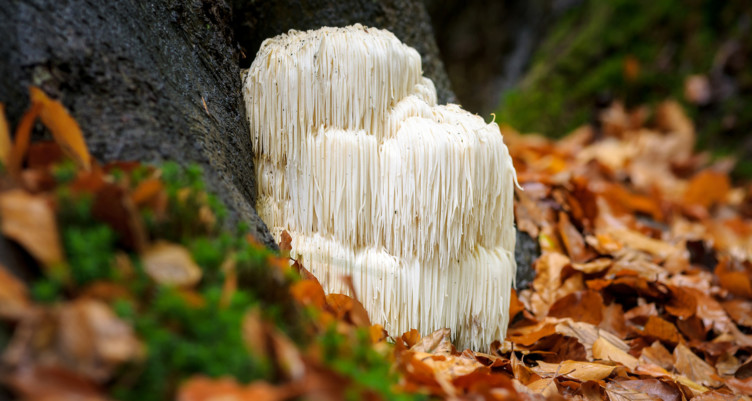
Lion’s mane (Hericium erinaceus) is a large, white, shaggy mushroom with cascading spines that grows on hardwood trees across North America, Europe and Asia. It’s been used in traditional Chinese and Japanese medicine for centuries, valued for digestive health and cognitive support.
What makes it stand out today is the modern research into its bioactive compounds: hericenones and erinacines. These molecules are commonly associated with lion’s mane’s potential role in NGF-related pathways, and they’re the reason you’ll find this mushroom in nootropic stacks, functional coffees and supplement shelves worldwide.
How Lion’s Mane Works: NGF, Hericenones, and Erinacines

Researchers are interested in lion’s mane because it contains compounds that may support brain-health pathways involved in neuron maintenance and communication. Much of the “how it works” discussion centers on neurotrophic factors, the proteins the body uses to support healthy nerve cells.
What Is Nerve Growth Factor (NGF)?
Nerve growth factor (NGF) is a naturally occurring protein involved in the growth, maintenance and normal function of certain neurons. NGF is also associated with processes like neuronal signaling and plasticity (the brain’s ability to adapt over time). Maintaining healthy neurotrophic factor activity is one reason NGF is frequently discussed in the brain-health research space.
Hericenones (commonly associated with the fruiting body)
Hericenones are a group of compounds reported in lion’s mane, most often associated with the mushroom’s fruiting body (the above-ground portion). In preclinical research (such as cell or lab models), certain hericenones have been investigated for their potential role in pathways related to NGF. While these findings are scientifically interesting, they do not necessarily predict outcomes in humans.
Erinacines (commonly associated with the mycelium)
Erinacines are another group of lion’s mane compounds more commonly associated with the mycelium (the root-like network). Preclinical studies have explored erinacines for their potential effects on NGF- and BDNF-related pathways. Human research is still emerging, and the relevance can depend on the extract type, dose and product quality.
New Compounds and Evolving Research (2023 and Beyond)
Ongoing studies continue to identify additional lion’s mane compounds and investigate how they interact with neuron-related pathways. For example, a 2023 paper from the University of Queensland reported newly characterized compounds and observed neurite outgrowth effects in preclinical models.[1] These findings help inform future research directions, but they should be interpreted as early evidence, not as proof of specific benefits in people.
7 Lion’s Mane Benefits: What the Research Shows

1. Cognitive Function and Memory
The strongest human evidence comes from healthy adults studied for acute and short-term effects:
- Docherty et al. (2023): 41 healthy adults aged 18-45 took 1,800 mg/day for 28 days. Processing speed improved from 737 to 688 milliseconds within 60 minutes of dosing (P=0.005), one of the first studies to show acute cognitive effects in younger, healthy adults.[2]
A 2025 study of 18 healthy adults given a single 3,000 mg dose found no significant acute improvement versus placebo.[3] Consistent daily use appears to matter more than one-time dosing.
2. Mood and Occasional Anxiety

Research suggests lion’s mane may support healthy levels of serotonin, dopamine and norepinephrine in the hippocampus while supporting neurogenesis in brain regions associated with mood.[4] There’s also a gut-brain connection: lion’s mane’s beta-glucans feed beneficial gut bacteria, which produce short-chain fatty acids that influence brain function via the vagus nerve.
3. Focus and Mental Clarity
The Docherty 2023 study is the most relevant here: healthy adults in their 20s-40s showed measurably faster processing speed within an hour of taking lion’s mane.[5] For people dealing with brain fog or difficulty concentrating, the NGF mechanism offers a different approach than stimulants. It supports the underlying neural infrastructure rather than forcing a temporary spike in alertness.
4. Nerve Health and Neuroprotection
NGF supports the physical integrity of nerve tissue, not just cognition. Healthy NGF activity is associated with normal nerve function and may support nerve recovery. This is an active area of research, with most evidence still preclinical.
5. Immune Support
Lion’s mane’s beta-glucan polysaccharides, particularly 1,3/1,6 beta-glucans, have been studied for their role in supporting immune function. Fruiting body extracts are commonly reported to contain higher concentrations of these compounds compared to mycelium-on-grain products.
6. Gut Health
The same beta-glucans that support immune function also act as prebiotics, feeding beneficial bacteria in the gut. Given the emerging research on the gut-brain axis, this creates an indirect pathway through which lion’s mane may support both digestive and cognitive health.
7. Body Soothing Activity
Lion’s mane is being studied for its potential role in supporting a balanced immune and inflammatory response, which is one factor researchers explore in overall cognitive wellness.[6]
Fruiting Body vs. Mycelium: Which Form Is More Potent?
This is the supplement quality question that determines whether you’re getting meaningful bioactive compounds or paying for grain powder. Most brain health supplements don’t make this distinction clear.
The Compounds Split Between Two Parts
Hericenones, commonly associated with the fruiting body (the visible mushroom), are the NGF-pathway compounds with the strongest consumer research base. Erinacines, commonly associated with the mycelium (the root network), are reported in preclinical studies as the most potent NGF-pathway inducers identified to date. Both are valuable. The issue is how commercial mycelium products are manufactured.
More Supplements From Bulletproof


The Grain Dilution Problem
Lion’s mane contains different compound groups, and their levels can vary between fruiting body and mycelium. Both forms can be valuable and quality depends on how the ingredient is produced and tested.
Many commercial mycelium ingredients are grown on grain (rice, oats or sorghum). Because the mycelium can’t be fully separated from the grain, the finished material may include a meaningful amount of grain, which can show up on lab tests as alpha-glucans (starch).
Some published analyses report higher beta-glucan levels in fruiting body materials than in certain mycelium-on-grain products, though results vary by supplier, process and test method.
What to Look for on a Label
- “100% fruiting body” or clear specification of which mushroom part is used.
- Beta-glucan content above 20% — verified by Megazyme assay.
- Dual extraction (hot water + ethanol): water extracts beta-glucans; ethanol captures hericenones and erinacines.
- Low alpha-glucan content. High alpha-glucans signal grain filler.
- Third-party testing — a Certificate of Analysis with batch-specific results. All Bulletproof supplements are rigorously tested by independent labs.
Lion’s Mane Dosage and How to Take It
How Much to Take
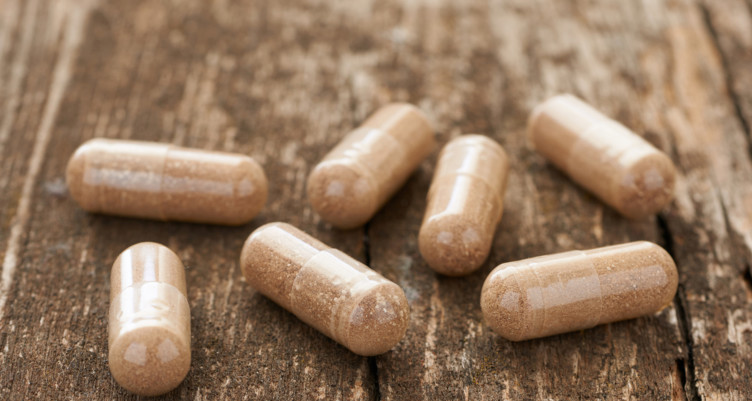
If you’re new to lion’s mane, here’s a simple guide based on what clinical studies have used:
| Form | Daily dose | Best for |
|---|---|---|
| Whole mushroom powder | 3,000-5,000 mg | Cooking, smoothies, tea. Not concentrated. |
| Standard extract | 1,000-3,000 mg | Most clinical trials used this range. |
| Concentrated extract (10:1) | 500-1,000 mg | Higher potency, fewer capsules. |
| Mushroom coffee | 250+ mg per cup | Daily habit, paired with caffeine. |
Most studies split the dose into 2-3 servings throughout the day rather than taking it all at once.
How Long Before You Notice Something
- Processing speed: within 60 minutes (Docherty 2023).[7]
- Subjective brain fog clearing: 2-3 months of daily use.
One important note: lion’s mane supports cognitive function while you’re taking it. Daily consistency is the most important factor.
Lion’s Mane and Coffee: A Natural Pairing
Adding lion’s mane to your morning coffee is one of the simplest ways to make it a daily habit, and the two work through complementary pathways. Caffeine provides immediate alertness by blocking adenosine receptors. Lion’s mane is studied for its role in supporting NGF-related pathways. Together, you get both acute focus and sustained cognitive support from the same cup.
Bulletproof’s High Achiever coffee delivers 250 mg of lion’s mane extract per cup alongside Coffeeberry whole coffee fruit extract and B vitamins (B1, B2, B3, B5 and B12 at 100% daily value). It’s a triple stack for cognitive support in a cup of rigorously tested, clean Arabica coffee.
How to Cook With Lion’s Mane Mushroom
Beyond supplements, lion’s mane is one of the few medicinal mushrooms that’s also genuinely delicious. It has a meaty, slightly sweet flavor often compared to crab or lobster, making it a popular choice for plant-based cooking.
Simple sauté: Slice the mushroom into 1/2-inch steaks, heat butter or ghee in a pan over medium-high heat and cook 3-4 minutes per side until golden brown. Season with salt, pepper and a squeeze of lemon.
In soups and stews: Tear into chunks and add during the last 10 minutes of cooking. Lion’s mane absorbs broth flavor well and maintains a satisfying texture.
As a meat substitute: Its fibrous texture makes it a natural stand-in for pulled pork, crab cakes or shredded chicken in tacos. Sear it hard for the best texture.
If you’re buying fresh, look for firm, white mushrooms without brown spots or excessive moisture. Store in a paper bag in the fridge and use within a week.
How Lion’s Mane Compares to Other Nootropics
Lion’s mane occupies a unique position in the nootropic landscape because of what it does: it appears to support neural infrastructure rather than adjusting neurotransmitter levels.
| Nootropic | Primary mechanism | Time to effect | Best for |
|---|---|---|---|
| Lion’s mane | NGF/BDNF pathway support | 4-8 weeks | Long-term brain health and neural support. |
| Bacopa monnieri | Bacoside-mediated neuron support | 8-12 weeks | Memory retention and recall. |
| Ginkgo biloba | Increased cerebral blood flow | 4-6 weeks | Acute oxygen delivery to the brain. |
| Phosphatidylserine | Cell membrane integrity | 2-4 weeks | Verbal recall in older adults. |
Lion’s mane and bacopa are considered complementary: lion’s mane supports long-term neurogenesis-related pathways while bacopa enhances memory function. For those building a cognitive support stack, Clarity + Focus combines multiple nootropic ingredients in a single caffeine-free formula.
Side Effects and Safety
Lion’s mane has a strong safety profile across clinical research. No serious adverse events have been reported in any published trial, including studies using 3,000 mg/day for 16 weeks.
Common side effects: Mild stomach discomfort, nausea and occasional skin rash. These are generally dose-dependent and resolve when the dose is reduced.
Who should talk to a doctor first:
- People with bleeding disorders or on blood-thinning medications.
- People on diabetes medications.
- Pregnant or breastfeeding women (no clinical safety data available).
- Anyone with a known mushroom allergy.
As with any supplement, consult a healthcare provider before starting, especially if you take prescription medications.
The Bottom Line on Lion’s Mane Benefits
Lion’s mane is one of the few natural compounds studied for its role in supporting NGF-related pathways, which are involved in the maintenance of healthy neurons and their connections. The clinical evidence supports cognitive function, mood and nerve health, but quality and consistency matter. Choose a supplement with fruiting body content, dual extraction and third-party testing. And give it time. Meaningful results build over weeks and months of daily use.
The simplest way to start is with your morning coffee. Try The High Achiever, with 250 mg of lion’s mane extract alongside Coffeeberry and B vitamins in every cup. Or explore the full Brain Health collection for caffeine-free options.
Frequently Asked Questions
What Does Lion’s Mane Do for the Brain?
Lion’s mane is studied for its role in supporting nerve growth factor (NGF), a naturally occurring protein involved in neuron maintenance and normal nervous-system function. Its bioactive compounds (hericenones from the fruiting body and erinacines from the mycelium) have been investigated in preclinical research for their potential role in NGF-related pathways. A 2023 University of Queensland study also identified new compounds that promoted neurite branching in preclinical models.[8]
How Long Does Lion’s Mane Take to Work?
Acute effects on processing speed have been measured within 60 minutes of a single dose.[9] Most people should plan for 2-3 months of consistent daily use before expecting substantial results.
What Are the Side Effects of Lion’s Mane?
Clinical studies report only mild side effects: occasional stomach discomfort, nausea and rare skin rash. No serious adverse events have been documented at doses up to 3,000 mg per day for 16 weeks. Consult a healthcare provider if you take blood-thinning or diabetes medications, as lion’s mane may affect clotting and blood sugar.
Should I Choose Fruiting Body or Mycelium Lion’s Mane?
The fruiting body is commonly associated with hericenones and higher beta-glucan concentrations. The mycelium is commonly associated with erinacines, but commercial mycelium-on-grain products often contain 60-70% grain filler. Look for products specifying “100% fruiting body,” beta-glucan content above 20% and dual extraction methods (hot water plus ethanol).
Can You Add Lion’s Mane to Coffee?
Yes. The pairing is safe and complementary. Caffeine provides immediate alertness via adenosine blocking while lion’s mane is studied for its role in supporting NGF-related pathways. Bulletproof’s High Achiever coffee delivers 250 mg of lion’s mane extract per cup alongside Coffeeberry and B vitamins for energy metabolism.
Sign up for early access to sales, product launches, the latest Bulletproof news and more!
This article was originally written on March 10, 2022 and has been updated with new content.