
Insulin Resistance Diet: A Practical Plate-Level Guide (Plus a Sample Day)
- An insulin resistance diet centers on stable blood sugar through protein-first meals, fiber-rich carbs and healthy fats. It’s a framework, not a single named “diet.”
- You don’t have to go fully keto. Research supports a range of approaches from low-carb to Mediterranean to a balanced plate method.
- A practical day looks like: Bulletproof Coffee with collagen for breakfast, a salmon and greens lunch, and a grass-fed beef stir-fry dinner.
- Diet supports insulin sensitivity. Medication and diagnosis decisions stay with your doctor.
If you’ve ever searched “insulin resistance diet” and walked away with a list of rules but no idea what to actually put on your plate at 7 AM tomorrow, you’re not alone. The most common thing people say in Reddit and YouTube comments is some version of: “I don’t know what to eat in a normal day.” That’s what this guide is for.
We’re not going to lecture you on biochemistry. We’re not going to tell you to go full keto or fail. And we’re not going to deflect with “ask your doctor” for the parts you actually came here to learn. Diagnosis and medication are absolutely your doctor’s job. But what’s on your plate is yours, and the practical answer is more navigable than the conflicting advice suggests.
What Is Insulin Resistance?
Insulin is the hormone your pancreas releases when you eat. Its job is to move glucose (from food) out of your bloodstream and into your cells, where it’s used for energy or stored. Insulin resistance is what happens when your cells stop responding to insulin as efficiently as they used to. Your pancreas compensates by making more insulin, and your blood sugar can stay elevated longer than it should.
This isn’t a diagnosis you can give yourself. A doctor uses fasting glucose, A1C, fasting insulin and other markers to make the call. If you’ve been told you have insulin resistance, prediabetes or are at risk for type 2 diabetes, this article is meant to be a starting point for the food side of the conversation, not a substitute for medical guidance.
What we can say with confidence is that diet has a real role. Multiple peer-reviewed reviews show that lowering the glycemic load of your meals supports insulin sensitivity over weeks to months.[1][2] That’s the practical lever you have control over today.
How Diet Actually Affects Insulin Resistance
Your insulin response depends on how much glucose hits your bloodstream after a meal and how fast it gets there. Two factors drive it: the carbohydrate amount and the speed of absorption.
Refined sugar and refined grains hit fast and high. Whole-food carbs paired with protein, fiber and fat hit slower and lower. Lower glycemic load means less insulin pressure on cells, which is the kind of metabolic environment associated with healthier blood sugar handling over time.
5 Principles for an Insulin Resistance Diet
If you remember nothing else from this article, remember these five.
- Protein at every meal. Protein blunts the glucose spike of whatever else you eat alongside it. It also supports satiety, which makes the next meal easier. Aim for 25-40g of protein per meal: eggs, fish, grass-fed beef, pasture-raised poultry or grass-fed collagen peptides.
- Smart carbs over refined carbs. Whole-food, fiber-rich carbs (legumes, berries, sweet potato, quinoa) have a much smaller insulin impact than refined ones (white bread, white rice, sugary drinks, ultra-processed snacks). You don’t have to eliminate carbs. You have to upgrade them.
- Healthy fats are your friend. Fat slows glucose absorption from the rest of the meal and provides sustained energy. Olive oil, avocado, nuts, seeds and C8 MCT oil are the daily anchors. (For why C8 MCT specifically matters for steady energy and ketone fuel, see our MCT oil benefits guide.)
- Front-load your day. Insulin sensitivity is highest in the morning and declines through the evening for most people. That means a larger, more carb-inclusive lunch generally has less metabolic impact than the same meal at 9 PM. If you’re going to eat carbs, eat them earlier.
- Mind your morning. A sweet, refined-carb breakfast on an empty stomach is one of the biggest insulin spikes of the day. A protein + fat morning (eggs and avocado, or the Bulletproof Coffee setup with collagen peptides) sets a steadier glucose curve for the next 4-6 hours.
What to Eat — A Plate Framework
Here’s how the plate breaks down. Half non-starchy vegetables, a quarter protein, a quarter smart carbs (or skip carbs entirely if you’re doing low-carb that day) and a healthy fat drizzled or stirred in.
Protein (1/4 plate):
- Wild-caught fish: salmon, sardines, mackerel, cod
- Pasture-raised eggs
- Grass-fed beef, bison or lamb
- Pasture-raised poultry
- Grass-fed collagen peptides (in coffee, smoothies, soups)
Non-starchy vegetables (1/2 plate):
- Leafy greens: spinach, arugula, kale, romaine, Swiss chard
- Cruciferous: broccoli, cauliflower, Brussels sprouts, cabbage
- Other low-glycemic: zucchini, bell peppers, asparagus, mushrooms, green beans
Smart carbs (1/4 plate, if including):
- Berries: blueberries, raspberries, blackberries
- Legumes: lentils, chickpeas, black beans
- Whole-food starches in modest portions: quinoa, sweet potato
- Skip: white rice, white bread, sugary cereal, fruit juice, soda, pastries
Healthy fats (drizzled or stirred in):
- Extra virgin olive oil
- Avocado, avocado oil
- Nuts and seeds: walnuts, almonds, pumpkin seeds, chia, flax
- Brain Octane C8 MCT oil (in coffee, smoothies, dressings)
- Grass-fed butter or ghee (for cooking)
More Diet Tips From Bulletproof


What to Avoid (or Strictly Limit)
This isn’t a “never again” list. Think of it as the swap-out priorities, the foods most worth replacing first.
- Sugar-sweetened drinks. Soda, juice, sweetened coffee drinks, sweetened iced teas. These are the highest-impact category to cut.
- Ultra-processed snacks. Chips, cookies, candy, pastries, most granola bars. They’re engineered for overconsumption and they spike glucose hard.
- Refined grains. White bread, white pasta, instant rice, most breakfast cereals. Swap to whole-grain in modest portions or skip.
- Industrial seed oils. Soybean, corn, cottonseed, sunflower oil. Pro-inflammatory and ubiquitous in restaurant cooking and packaged foods. Cook at home with olive oil, avocado oil or grass-fed butter when you can.
- “Healthy” sugar foods. Flavored yogurt, sweetened plant milks, sweetened granola, kombucha with added sugar. Read labels. Many are dessert in disguise.
- Alcohol (especially mixed drinks). If you drink, dry red wine with food is the lower-impact option.
A Sample Day of Eating
This is the single most-requested thing in the searches around this topic, so here’s an actual day, the way someone working on insulin sensitivity might eat it.
Breakfast (around 8 AM):
- A cup of Bulletproof Coffee made with 1 tablespoon grass-fed butter, 1 tablespoon Brain Octane C8 MCT oil and 1 scoop collagen peptides (optional cinnamon dash for blood-sugar support)
- Or: 3-egg omelet with sautéed spinach and mushrooms, half an avocado on the side, a small handful of blueberries
Lunch (around 12:30 PM):
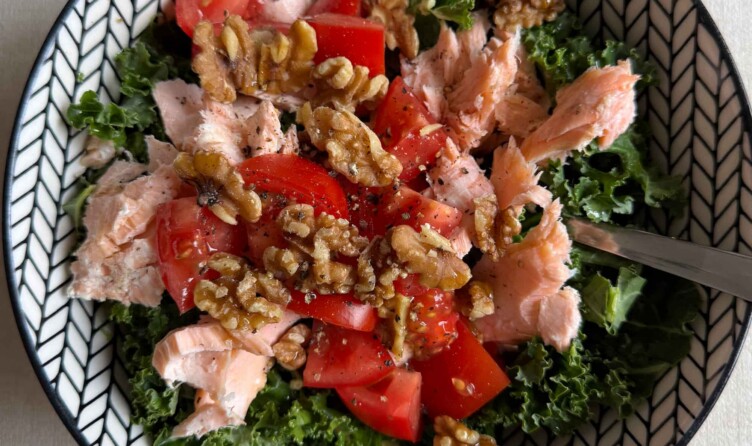
- Grilled wild salmon over a big bed of arugula and baby spinach
- Olive oil, lemon and sea salt drizzle
- Side of lentils (1/2 cup) for slow-burning fiber-rich carbs
- A few cherry tomatoes and slivered almonds for crunch
Afternoon (around 3:30 PM, if you need it):
- Small handful of walnuts and 6-8 fresh cherries
- Or: collagen smoothie — frozen blueberries, unsweetened almond milk, 1 scoop collagen peptides, a few ice cubes, blended
Dinner (around 6:30 PM):
- Grass-fed beef stir-fry with broccoli, bell peppers, mushrooms and a clove or two of garlic
- Cooked in avocado oil with a splash of coconut aminos
- Over cauliflower rice, or with a small (1/2 cup) portion of quinoa on the side
Optional (after dinner):
- Decaf coffee or chamomile tea
- A square of 85%+ dark chocolate if you want a small sweet
That’s it. Roughly 100-140g of protein, 30-40g of fiber, plenty of healthy fats, low added sugar. Repeatable. Cookable. And built on real food rather than 14 different supplements.
When Carbs Show Up — How to Pair and Time Them
Real life includes carbs. A friend’s birthday, a slice of bread with dinner, a small bowl of rice with takeout. Here’s how to handle them without unraveling your week.
- Always pair carbs with protein, fat and fiber. Never eat carbs alone on an empty stomach. The same bowl of pasta with grilled chicken, olive oil and a green salad has a meaningfully smaller insulin impact than the pasta alone.
- Eat food in order. Vegetables and protein first, carbs last. Research on “food order” shows a real difference in post-meal glucose when the same meal is eaten in that sequence.
- Walk after carb-heavy meals. Ten minutes of easy walking after eating helps clear glucose from the bloodstream. It’s one of the highest-leverage habits in the whole framework.
- Earlier in the day is better. A carb-heavier lunch is metabolically friendlier than the same carbs at 9 PM. Front-load when you can.
How Bulletproof Products Fit In
You don’t need supplements to do this. The whole framework above is built on real food first. But a few of our products are designed to make the framework easier to live with, and they slot in cleanly.
Coffee + Brain Octane C8 + grass-fed butter in the morning gives you sustained, ketone-fueled energy and satiety without spiking glucose. For many people, it’s the difference between a 10 AM crash and a steady morning. (If you’re new to intermittent fasting and want to know whether collagen coffee breaks your fast, see our intermittent fasting guide.)
Collagen peptides are a clean, neutral-tasting way to add 10-20g of protein to almost anything: coffee, smoothies, soups, oatmeal. Especially useful if you struggle to hit protein targets at breakfast.
C8 MCT oil is one of the most useful kitchen fats for this framework: it goes in coffee, salad dressings, smoothies and post-workout. It supports satiety and steady energy without affecting blood sugar.
If you’re trying to find the cleanest way to set up the morning anchor, browse our coffee collection: rigorously tested for mold toxins, grass-fed-pasture-raised butter compatible and built to be the steadiest start to your day.
More Diet Tips From Bulletproof
The Bottom Line
An insulin resistance diet isn’t a single name on a menu. It’s a framework: protein at every meal, smart carbs over refined ones, healthy fats, front-loaded eating and a steady morning routine. Pick the version that fits your life and apply it consistently for 8-12 weeks. That’s the timeframe research and lived-experience both point to for noticeable changes in day-to-day energy, cravings and meal satiety. Any clinical-level shifts are for your doctor to track and interpret.
Diet supports your insulin sensitivity. It doesn’t replace medical care, and we’d never claim it does. But it’s the daily lever you can pull starting tomorrow morning.
Frequently Asked Questions
What is the best diet for insulin resistance?
The best diet is the one that lowers your glycemic load consistently and fits your life. That can mean low-carb, Mediterranean, a balanced plate method or a modified keto approach. The common thread across all approaches that work: protein at every meal, smart carbs over refined ones, healthy fats and stable meal timing. Pick the version you can sustain for months, not weeks.
What should I eat first in the morning for insulin resistance?
Skip the sweet refined-carb breakfast. Anchor your morning on protein and healthy fat. A 3-egg omelet with avocado, or a Bulletproof Coffee made with grass-fed butter, C8 MCT oil and a scoop of collagen peptides, both set a stable glucose curve for the next 4-6 hours. If you include any fruit, lean toward berries.
What foods should I avoid with insulin resistance?
The highest-impact swaps: sugar-sweetened drinks (soda, juice, sweet coffee drinks), ultra-processed snacks (chips, cookies, candy), refined grains (white bread, white rice, instant noodles), industrial seed oils (soybean, corn, cottonseed) and “healthy” sugar foods like flavored yogurt and sweetened granola. You don’t have to do it all at once. Start with sugar-sweetened drinks — they tend to be the single biggest win.
Can you reverse insulin resistance with diet?
This question gets at the line between food and medical care. Research consistently shows that lowering the glycemic load of your meals (through low-carb, Mediterranean or balanced plate-method eating) may support healthier blood sugar responses and insulin sensitivity in many people over weeks to months.[3] Whether your specific clinical picture shifts is something only your doctor can interpret using your individual markers, history and care plan. Diet is foundational, and it works alongside (not instead of) the medical care your doctor provides.
Is keto the only way to fix insulin resistance?
No. Keto is one valid approach and the research supports it for many people,[4] but it’s not the only one. Mediterranean and balanced “plate method” eating patterns also support insulin sensitivity when they’re applied with low glycemic load principles. If you want to try keto, our keto diet beginner’s guide walks through the basics. If keto feels unsustainable, that’s useful information — pick a framework you can actually keep doing.
Does intermittent fasting help with insulin resistance?
Research suggests that intermittent fasting may support insulin sensitivity in many people, particularly when paired with a lower-glycemic-load eating pattern during the eating window.[5] It’s not for everyone, and it’s not necessary for the framework in this article to work. If you want to explore it, our intermittent fasting guide walks through the common schedules and how to get started safely.
Sign up for early access to sales, product launches, the latest Bulletproof news and more!