8 Morning Routine Must-Haves for Success
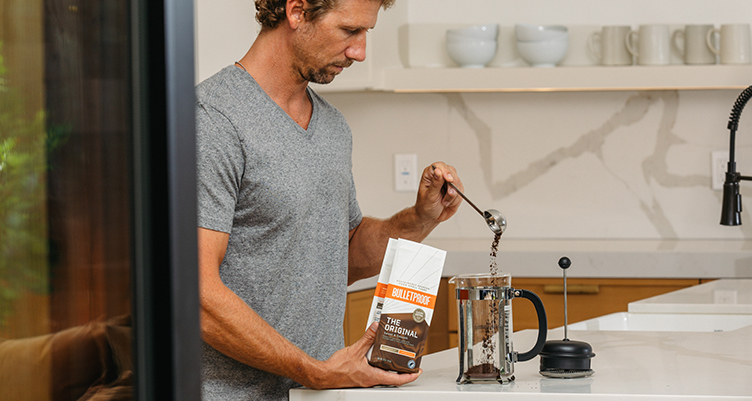
- Morning sunlight within 30 minutes of waking is the single highest-impact habit. It resets your circadian clock, supports serotonin production and improves nighttime sleep.
- Pairing coffee with C8 MCT oil provides dual-pathway brain energy: caffeine for immediate alertness (15-45 min) plus ketones for sustained fuel (80-200 min).
- The most effective morning supplement stack pairs L-theanine with coffee, saves fat-soluble vitamins for your first meal and reserves ashwagandha for the evening.
- Whether you eat breakfast or fast, prioritizing fat and protein over refined carbs is the key to sustained morning energy without a 10 AM crash.
Most morning routine advice stops at “drink water and meditate.” It misses what may be the highest-leverage piece: what you actually put in your body.
Search “morning routine for success” and you’ll find listicles from productivity apps telling you to make your bed, avoid your phone and eat breakfast. Solid advice, but none of it tells you what to eat, what to drink or when to supplement for sustained energy and focus that lasts past 10 AM.
That’s the gap this guide fills. At Bulletproof, we’ve spent over a decade developing functional coffee, MCT oils, collagen proteins and supplements designed to make your morning work harder for you. These 8 must-haves cover the full picture, from light exposure and movement to the nutrition science that most morning routine guides skip entirely.
1. Get morning sunlight within 30 minutes of waking

This is the single most impactful habit you can add to your morning, and it requires zero effort.
Five to 10 minutes of direct sunlight within 30 minutes of waking supports serotonin production, resets your circadian clock and improves nighttime sleep quality. A 2021 study of over 400,000 UK Biobank participants found that greater outdoor light exposure was associated with earlier chronotype, fewer insomnia symptoms and less daytime tiredness.[1] A 2025 study found that every 30 minutes of morning sunlight before 10 a.m. correlated with a 23-minute earlier sleep midpoint and improved sleep quality scores.[2]
That cascade effect is what makes sunlight so powerful: it doesn’t just help you wake up today. It helps you fall asleep easier tonight.
Why sunlight specifically? Your eyes contain photosensitive retinal ganglion cells (ipRGCs) that send light signals directly to the suprachiasmatic nucleus, the brain’s master clock.[3] This is what sets your melatonin onset timing for the evening and calibrates your cortisol rhythm for the day. Artificial indoor light is typically too dim (300-500 lux) to trigger this response. You need 10,000+ lux, which outdoor light delivers even on overcast days.
If you’re in a low-sunlight climate, a 10,000-lux light therapy lamp within the first 30 minutes of waking provides a comparable effect. Skip the sunglasses. Your eyes need the signal.
2. Hydrate before you caffeinate

You wake up dehydrated. After 7-8 hours without water, your body is running a fluid deficit that affects cognitive function, energy and mood before you’ve even started the day.
Drink 16-20 oz of water before your first cup of coffee. Caffeine is a mild diuretic, so skipping this step means you’re digging a deeper hydration hole. Think of water as the pre-step to coffee, not a replacement for it. This alone can reduce the morning grogginess that most people blame on “not being a morning person.”
3. Delay your coffee (and make it count)
When you drink your first cup matters almost as much as what’s in it, but the right timing depends on how you wake up.
Your body produces a natural cortisol surge upon waking called the cortisol awakening response (CAR), an increase of 50% or more within the first 30-45 minutes.[4] Caffeine consumed during this peak can blunt the cortisol effect and lead to a harder crash when both wear off. That’s why some people benefit from delaying coffee by 60-90 minutes after waking.
But it’s not one-size-fits-all. The right timing depends on your chronotype, how your body naturally wakes up. If you spring out of bed with energy, delaying coffee makes sense because your cortisol is already doing its job. If you wake up groggy and need help getting going, having coffee sooner and letting it work alongside your cortisol may be the better move. Pay attention to how you feel and adjust from there.
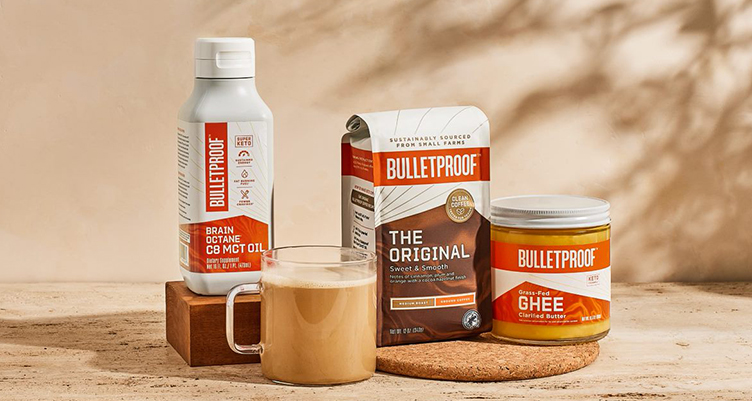
Either way, what’s in your cup matters. A standard black coffee gives you caffeine, alertness that kicks in within 15-45 minutes and fades within a few hours. A Bulletproof Coffee (coffee blended with grass-fed butter and Brain Octane C8 MCT Oil) adds a second energy pathway. C8 MCT converts to ketones, which provide sustained brain fuel that peaks 80-200 minutes after ingestion. Research confirms that C8 MCT combined with caffeine has an additive ketogenic effect, meaning your brain gets both immediate alertness and a slower-burning energy source that carries you through the morning.[5]
One thing worth noting: a 2021 controlled study found no significant difference in cognitive test scores between Bulletproof coffee and black coffee. But it did find that Bulletproof coffee significantly increased satiety and reduced the desire to eat over a 3-hour period (P=0.04).[6] The real value isn’t a short-term IQ boost. It’s sustained energy without the crash or the mid-morning hunger that derails focus.
For more on upgrading your brew, see 12 ways to improve your morning coffee routine.
4. Move your body (even for 10 minutes)

You don’t need a 5 AM gym session to get the benefits of morning movement. What matters is that you move.
A 10-minute walk, a quick stretch sequence or a bodyweight circuit all count. The goal is to increase blood flow, clear residual sleep inertia and signal to your nervous system that the day has started. Even a short walk outside combines movement with sunlight exposure, doubling the benefit in one habit.
The Bulletproof approach to morning movement is minimal: high-intensity interval training 3 times per week (30-second sprints with walking recovery, 6-8 rounds) and simple movement on other days. The point is consistency, not intensity. If you’re just starting, a 10-minute walk around the block is a better long-term investment than a 60-minute gym session you do twice and abandon.
Consistency matters more than perfection. Attaching a new habit to an existing one (like walking right after your morning coffee) makes it easier to stick because you’re building on a routine you already have.
5. Build a morning supplement stack
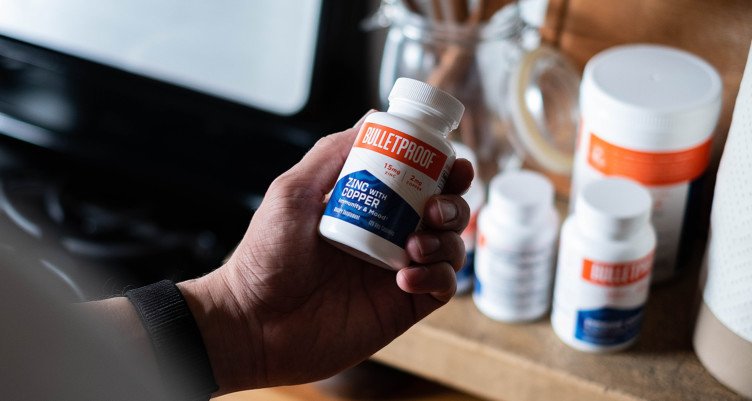
Here’s where things get specific. Most articles say “take your vitamins” and move on, but which supplements you take, when you take them and what you pair them with changes how well they work.
With your coffee
- L-theanine (200 mg) is a well-known coffee-pairing supplement. It promotes calm focus and can help smooth out the jittery edge of caffeine without reducing alertness.
With your first meal
- Collagen peptides. Grass-fed, pasture-raised collagen peptides reach peak plasma concentrations at 100-130 minutes post-ingestion and remain elevated for several hours.[7] Adding them to your coffee or first meal provides sustained amino acid availability.
- Fat-soluble vitamins (D, E, K) need dietary fat for absorption. Take them with food, not on an empty stomach during a fast.
- Omega-3s are best absorbed with a fat-containing meal.
Morning, empty stomach OK
- B vitamins are water-soluble and support energy metabolism. Won’t break a fast.
- Magnesium glycinate (200-400 mg) is generally well-tolerated empty. Supports mitochondrial energy production.
- Rhodiola rosea (288-680 mg) is an energizing adaptogen that supports cognition and fatigue resistance. Best taken in the morning (unlike ashwagandha, which is calming and better suited for evening. See our ashwagandha benefits guide).
Save for evening
- Ashwagandha is GABA-mimetic and calming. It supports sleep and stress recovery overnight. Taking it in the morning can cause drowsiness for some people, so evening dosing gets you the cortisol-lowering benefits without the daytime sedation.
The timing principle: Morning supplements should be energizing or neutral. Evening supplements should be calming or restorative. Fat-soluble compounds need fat for absorption. Water-soluble compounds are fine on an empty stomach. Getting this right means each supplement works at its peak instead of fighting your body’s natural rhythms.
All Bulletproof supplements are rigorously tested by independent labs for purity and efficacy, a standard that matters more than most people realize in an industry where quality varies widely.
6. Eat for energy (or fast smart)
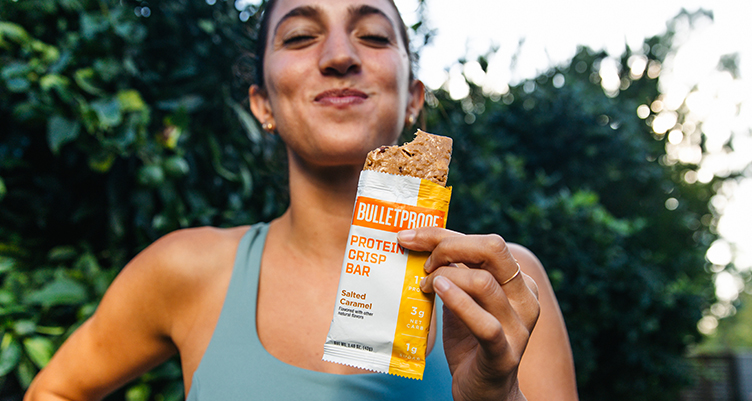
“Eat breakfast” is the most common morning routine advice and the least specific. What you eat matters far more than whether you eat.
Path 1: Eat a high-performance breakfast. Think eggs, avocado and quality protein, not cereal, toast or a sugary smoothie. The goal is sustained blood sugar, not a glucose spike followed by a crash at 10 AM. If you eat breakfast, front-load the protein: 30 grams within 30 minutes of your first meal keeps blood sugar stable and supports satiety through the morning.
Path 2: Fast smart with Bulletproof Coffee. If you practice intermittent fasting, you don’t have to white-knuckle through a hungry morning. Black coffee doesn’t break a fast. MCT oil adds calories but doesn’t raise blood sugar or insulin, and it supports ketosis while keeping you fueled. This is the Bulletproof Intermittent Fasting approach: skip solid food, use coffee + C8 MCT as your breakfast replacement and break your fast later with a nutrient-dense meal.
Both paths work. The one that doesn’t? A high-sugar, low-protein breakfast that spikes your glucose at 7 AM and leaves you reaching for another coffee (or worse, a vending machine) by 10. The common thread between a good breakfast and smart fasting is the same: prioritize fat and protein over refined carbs.
One transparency note: collagen protein does trigger mTOR activation, which may interrupt autophagy. If maximizing autophagy is your goal, save collagen for your eating window.
For more on building sustained energy throughout the day, or for a deeper dive into fasting protocols, see our intermittent fasting guide.
Results may vary. Consult your healthcare provider before starting any fasting protocol.
7. Protect your first hour (no screens)

Checking your phone the moment you wake up puts your brain into reactive mode. Fragmented stimuli (emails, news, social media) spike dopamine and fracture your attention before the prefrontal cortex has fully come online.
The fix is simple: complete your hydration, sunlight and movement routine before any screen engagement. This lets your brain establish a proactive cognitive state for the day, operating from intention, not reaction.
Practical tips: put your phone across the room as your alarm (forces you to stand up). Use a speaker for music, not your phone. If you need to check something urgent, set a specific time. “I check my phone at 8 AM” gives you a boundary instead of a bottomless scroll. Most people find that the “urgent” emails from 11 PM are still there at 8 AM, and they’re better equipped to handle them after sunlight, water and coffee.
8. Set one intention for the day

The final must-have is the simplest. Before you leave the house (or sit down at your desk), identify one thing that would make today a success. Not a to-do list. One clear priority.
For some people, this looks like a brief meditation or a heart rate variability check. For most, a single sentence written in a journal or spoken aloud is enough. The habit takes 60 seconds and gives the rest of your day a filter: when distractions come (and they will), you have a reference point for what actually matters.
Start small. Start tomorrow. Pick 2-3 of these must-haves and do them consistently for a week before adding more.
Own your morning, own your day
Most mornings don’t fall apart because you lack discipline. They fall apart because nobody taught you what to do, and in what order, with the things you’re already consuming. Coffee, food, supplements. They’re all tools. The question is whether you’re using them well.
If you’re looking for the simplest entry point, start with your cup of coffee. Try the Bulletproof Coffee recipe tomorrow morning, or grab a Bulletproof Starter Kit to build the full morning stack: clean coffee, Brain Octane C8 MCT Oil and Collagen Peptides.
Frequently asked questions
What is a good morning routine?
A good morning routine includes sunlight exposure within 30 minutes of waking, hydration before caffeine, 10-20 minutes of movement and nutrition optimized for sustained energy. The most effective routines are 30-90 minutes and completed before 9 AM. Consistency matters more than duration.
How long should a morning routine be?
Research suggests 30 minutes as the minimum effective dose, with 60-90 minutes being ideal. The 20/20/20 rule (20 minutes of movement, 20 minutes of reflection, 20 minutes of learning) is a popular framework for structuring the first hour. A shorter routine done daily outperforms an elaborate one done sporadically.
What supplements should I take in the morning?
The most evidence-supported morning supplements are L-theanine (200 mg paired with coffee for calm focus), C8 MCT oil for sustained brain energy, rhodiola rosea for fatigue resistance and B vitamins for energy metabolism. Save fat-soluble vitamins (D, E, K) for your first meal and ashwagandha for evening.
Does Bulletproof Coffee break intermittent fasting?
The MCT oil and butter in Bulletproof Coffee add calories but don’t trigger an insulin response, preserving the metabolic state of fasting and supporting ketosis. Collagen protein, however, does activate mTOR and may interrupt autophagy. Black coffee alone does not break a fast.
Why do I feel tired after coffee in the morning?
Three common causes: adenosine rebound (caffeine blocks but doesn’t clear accumulated sleep signals), dehydration from overnight fluid loss and cortisol-caffeine conflict from drinking coffee within 60-90 minutes of waking. Delay coffee, hydrate first and pair caffeine with L-theanine to smooth the energy curve.
Does drinking Bulletproof Coffee in the morning improve mental performance?
A 2021 controlled study found no significant difference in cognitive test scores between Bulletproof coffee and black coffee.[8] However, Bulletproof coffee did significantly increase satiety and reduce the desire to eat over a 3-hour period (P=0.04). The real benefit is sustained energy: caffeine provides immediate alertness while C8 MCT-derived ketones offer slower-burning brain fuel that peaks 80-200 minutes later.
Sign up for early access to sales, product launches, the latest Bulletproof news and more!
This article has been updated with new content.


