
Benefits of Collagen: What the Science Actually Shows

- Skin, joints, gut, brain and sleep support – collagen peptides may benefit all five, backed by 15+ clinical studies.
- Most people see skin improvements within 4 weeks and joint relief within 8-12 weeks at doses of 5-15g per day.
- One 2025 study found oral collagen supplementation reduced biological age by 1.4 years within 6 months.[ref url="https://www.nature.com/articles/s41514-025-00280-7"]
- Collagen peptides and hydrolyzed collagen are the same thing – both are broken down for better absorption than intact collagen.
- Grass-fed, third-party tested collagen powder offers the cleanest sourcing and dissolves easily in coffee, smoothies or water.
Does collagen actually do anything – or is it just expensive protein?
Fair question. Collagen supplements are everywhere, and the claims range from “erases wrinkles” to “rebuilds your entire body.” Skeptics say your stomach just breaks it down like any other protein. So who’s right?
Here’s what the research actually shows. Collagen is the most abundant protein in your body, making up roughly 30% of your total protein.[1] It provides structural support to your skin, joints, bones, gut lining and connective tissue. And while your body does break collagen peptides into amino acids during digestion, research shows those specific amino acids – glycine, proline and hydroxyproline – preferentially accumulate in collagen-rich tissues like skin and cartilage.
This guide walks through what the clinical research actually shows, benefit by benefit, so you can decide whether collagen belongs in your routine and how to get the most from it. No hype. Just evidence.
What Is Collagen?
Collagen is the most abundant protein in your body. It’s the structural glue that holds your skin, bones, joints, tendons and gut lining together. Your body produces it naturally, but production starts declining after age 20 and drops sharply after menopause.
There are 28 types of collagen, but five matter most for supplementation:
- Type I. Found in skin, bones and connective tissue. Makes up roughly 90% of your body’s collagen. The primary target for skin elasticity and anti-aging.
- Type II. Found in cartilage. Key for joint health and mobility.
- Type III. Found in skin, muscles and blood vessels. Often paired with Type I in supplements.
- Type V. Found in some skin layers and involved in tissue formation.
- Type X. Found in cartilage and bone. Plays a role in new bone formation.
Most collagen supplements contain Types I and III (from bovine sources) or Type II (from chicken or marine sources). For a deeper breakdown, see the full guide to types of collagen.
What Are Collagen Peptides (And How Are They Different From Regular Collagen)?
So if your body already makes collagen, why take a supplement? Because the form matters.
Collagen protein in its native form is a large, triple-helix molecule. Think of it as a tightly wound rope. Your body can’t absorb it whole – it needs to break it down first, and that process is slow and inefficient.
Collagen peptides (also called hydrolyzed collagen) are that same protein, pre-broken into much smaller fragments through a process called enzymatic hydrolysis. The result: short amino acid chains between 500 and 2,000 Daltons that dissolve in liquid, absorb quickly through the gut wall and show up in the bloodstream within an hour.
The practical difference? Collagen peptides are bioavailable. Studies show they’re taken up in the digestive tract as intact di- and tripeptides – not just broken down into individual amino acids – which means they can signal collagen-producing cells directly.
Collagen peptides vs. protein powder: Collagen peptides aren’t a replacement for whey or plant protein. They contain high levels of glycine, proline and hydroxyproline (amino acids concentrated in connective tissue) but lack tryptophan and are low in branched-chain amino acids. Think of collagen as a targeted supplement for structure and recovery, and protein powder as a complete source for muscle building.
Collagen Benefits for Skin: What the Research Shows

Skin is where most people notice collagen first – and it’s where the clinical evidence is strongest.
A 2025 meta-analysis published in The American Journal of Medicine[2] analyzed 23 randomized controlled trials with 1,474 total participants. The finding: oral collagen supplementation significantly improved skin hydration, elasticity and wrinkle depth compared to placebo.
A 2024 randomized, double-blind, placebo-controlled trial[3] found that 12 weeks of hydrolyzed collagen intake increased measurable collagen content in the skin and improved hydration, elasticity (the R2 elasticity index increased by 22.7%) and wrinkle appearance. Hair density also increased by 27.6% in the same study.
One important note on study quality: the 2025 meta-analysis also found that studies funded by supplement companies showed larger effects than independent studies. That doesn’t invalidate the results, but it’s worth keeping in mind. The strongest independent evidence supports skin hydration and elasticity improvements; the wrinkle evidence is more mixed.
How Long Until You See Skin Results?
Based on the available clinical trials:
- 4 weeks: Skin hydration improvements become measurable. Many users report their skin “feels plumper” and less dry.
- 8 weeks: Wrinkle depth reduction begins to show in clinical measurements.
- 12 weeks: Full effects on elasticity, hydration, wrinkles and hair density are typically observed.
Consistency matters more than timing. Whether you take collagen in the morning with your Bulletproof Coffee or in an evening smoothie, daily use is what drives results.
Collagen for Hair and Nails
Hair and nail improvements are among the first signs people notice – and the research backs it up. The same 2024 trial[4] that measured skin elasticity also found a 27.6% increase in hair density after 12 weeks of daily collagen supplementation. Separately, collagen’s amino acid profile (rich in proline, a building block for keratin) supports stronger, less brittle nails. Most users report visible nail changes within 4-8 weeks and hair improvements within 8-12 weeks at 5-10 grams per day.
Collagen for Joints: Pain Relief and Mobility
Joint health is where collagen’s structural role gets really clear – and where the clinical evidence has strengthened significantly in the past 2 years.
A 2025 systematic review and meta-analysis[5] incorporating 870 participants across 11 randomized controlled trials found that collagen supplementation produced significant improvements in both joint function scores and pain scores compared to placebo.
Specific findings from recent trials:
- A 2025 double-blind, placebo-controlled trial[6] found that 3,000 mg per day of low-molecular-weight collagen peptides significantly reduced knee osteoarthritis pain compared to placebo.
- Undenatured type II collagen (UC-2) at just 40 mg per day has been shown to reduce inflammation and pain while improving range of motion and quality of life in osteoarthritis patients.
The people who report that their “joints feel lubricated” after a few months of consistent use aren’t imagining things. Collagen provides the raw materials (primarily type II collagen) that your body uses to maintain and repair cartilage – the smooth tissue that cushions your joints.
Timeline: Most joint studies run 8-12 weeks before measuring outcomes. Don’t expect overnight results. Give it at least 2-3 months of daily use before evaluating whether it’s working for you.
Collagen Peptides and Gut Health

Here’s something most collagen articles miss entirely: the gut connection.
If you’ve experienced bloating or digestive discomfort when starting collagen, you might be surprised to learn that collagen peptides may actually support digestive health over time. The key amino acids in collagen – glycine and glutamine – play a direct role in maintaining the intestinal lining.
A 2022 clinical study published in JMIR Formative Research[7] found that 20 grams of daily collagen peptide supplementation reduced bloating and improved mild digestive symptoms in healthy women, without any other dietary or lifestyle changes.
The mechanism goes deeper than symptom relief. Research published in 2024[8] shows that collagen peptides can act as prebiotics – serving as a nitrogen source for beneficial gut bacteria and promoting the production of short-chain fatty acids. Animal studies found that collagen peptide consumption increased populations of beneficial bacteria like Lactobacillus and Akkermansia muciniphila while reducing inflammation-associated bacteria.
Lab studies also show that collagen peptide fractions can help protect against intestinal barrier dysfunction – the mechanism behind what some practitioners call “leaky gut.”
For more on digestive wellness strategies, explore the Bulletproof gut health content.
Important caveat: Most gut health research on collagen is still in early stages, with a mix of human and animal studies. Higher doses (above 20g) in animal models have shown mixed results. Start with 10-20g daily and see how your body responds.
Collagen for Brain Health and Cognitive Function
Cognitive function is one of the more intriguing areas of emerging collagen research.
The amino acid glycine, which makes up roughly one-third of collagen’s amino acid profile, functions as an inhibitory neurotransmitter in the central nervous system. It plays a role in neurotransmitter regulation, neuroprotection and the modulation of inflammatory responses in the brain.
Research published in Molecular Neurodegeneration[9] has identified that collagen VI may protect brain cells against amyloid-beta proteins – the toxic aggregates widely associated with Alzheimer’s disease.
This is still early-stage research, and no one should take collagen expecting it to prevent cognitive decline. But the connection between collagen’s amino acid profile and brain function is a promising area that deserves more investigation. For those already supporting brain health with tools like Brain Octane C8 MCT oil and the Bulletproof brain health collection, collagen peptides may complement the stack.
Benefits of Taking Collagen at Night
Most people add collagen to their morning coffee or smoothie. But there’s a strong case for taking it before bed, especially if sleep quality is a priority.
A 2024 study published in the European Journal of Nutrition[10] found that physically active men consuming 15 grams of collagen peptides one hour before bedtime experienced significantly fewer nighttime awakenings (21.3 versus 29.3 on placebo) and showed improved next-day cognitive function.
The mechanism is glycine. Collagen is roughly 33% glycine by amino acid composition. In human studies, 3 grams of glycine (the amount in approximately 15 grams of collagen peptides) taken before bed has been shown to:
- Lower core body temperature by increasing blood flow to extremities – a key trigger for sleep onset.
- Reduce the time it takes to fall asleep (sleep onset latency).
- Improve subjective sleep quality and reduce daytime fatigue.
If you’re already taking collagen for skin or joint benefits, shifting your dose to an evening routine lets you stack sleep support on top. Mix it into a warm drink, herbal tea or golden milk about an hour before bed.
Keto Collagen Benefits: Why It Fits a Low-Carb Lifestyle
If you’re following a keto diet or practicing intermittent fasting, collagen peptides fit neatly into your routine.
Collagen peptides contain zero carbs and zero sugar. They provide 9-11 grams of protein per serving without spiking blood sugar or disrupting ketosis. For people on keto who are focused on clean fats and moderate protein, collagen fills the connective-tissue support gap that a high-fat, moderate-protein diet can sometimes leave.
Here’s where the Bulletproof ecosystem comes together: adding collagen peptides to your morning Bulletproof Coffee alongside Brain Octane C8 MCT oil gives you a drink that supports sustained energy from C8 ketone production, connective tissue and skin support from collagen and a clean protein source that won’t break your fast (the protein in collagen is minimal enough that many fasting practitioners include it in their fasting window, though this is individual).
Collagen peptides vs. protein powder for keto: Standard whey protein has a stronger insulin response due to its branched-chain amino acid content. Collagen peptides have a lower insulinogenic effect, which makes them a better fit for the fasting and keto context. They’re not a replacement for complete proteins at mealtime, but they’re an ideal between-meal or fasting-window supplement.
Collagen Benefits for Women
Collagen production drops sharply after menopause – women can lose up to 30% of their skin collagen in the first five years post-menopause. This makes supplementation especially relevant for women over 40 who are noticing accelerated skin thinning, joint stiffness or weaker nails.
Beyond skin and joints, emerging research points to collagen’s role in bone health. Collagen makes up roughly 90% of the organic matrix of bone, and postmenopausal bone density loss is closely tied to declining collagen synthesis. Early studies suggest that collagen peptide supplementation may support bone mineral density when combined with calcium and vitamin D, though larger trials are still needed.
For women managing hormonal transitions, collagen peptides offer a clean, zero-carb protein source that supports multiple systems at once – skin elasticity, joint comfort, bone strength and gut integrity – without adding sugar or hormones to the routine.
Collagen Benefits for Men
Men tend to associate collagen with skincare, but the strongest evidence may actually matter more for active men: joint recovery, tendon support and sleep quality.
The 2024 sleep study[11] specifically used physically active men as participants and found that 15 grams of collagen peptides before bed significantly reduced nighttime awakenings and improved next-day cognitive function. For men who train regularly, that recovery advantage compounds.
Collagen also provides glycine and proline – amino acids that support tendon and ligament repair. Men who lift, run or play sports put repetitive stress on connective tissue that standard protein powders don’t address. Adding 10 grams of collagen peptides daily targets this gap directly.
More From Bulletproof


How Much Collagen Should You Take Per Day?
One of the biggest frustrations people report is not knowing how much to take – or whether they’re taking enough to actually see results. Here’s what the clinical research supports:
Safe dosages generally fall between 2.5 and 15 grams per day, according to the Cleveland Clinic.[12] Benefits tend to plateau beyond 10 grams for most goals, with the exception of sleep support (where 15g is the studied dose) and gut health (where 20g was used in clinical trials).
When to take collagen: Timing is flexible, but context matters. Pre-workout, collagen may support energy and connective tissue readiness. Post-workout, it supplies the amino acids your tendons and ligaments need for repair. For sleep support, take it an hour before bed. For skin and general wellness, consistency matters more than timing – just pick a slot that sticks.
Structural support for skin, joints and gut in one daily scoop. Bulletproof Collagen Peptides deliver 11 grams of grass-fed, pasture-raised collagen protein per 2-scoop serving, right in the sweet spot for most goals. They dissolve cleanly in hot or cold liquids with no gritty texture and no aftertaste, which addresses one of the most common complaints people have about collagen powders.
How to Choose a Quality Collagen Supplement
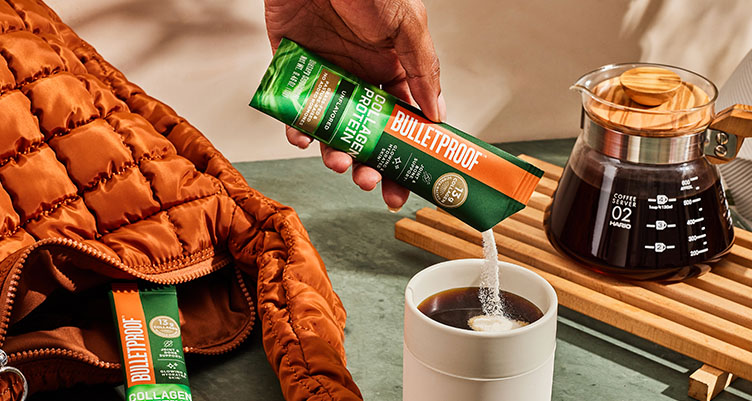
Not all collagen supplements are created equal, and sourcing quality matters. Here’s what to look for:
Sourcing: Choose grass-fed, pasture-raised bovine collagen for Type I and III (the types most relevant to skin, joints and gut). Clean sourcing reduces exposure to hormones, antibiotics and environmental contaminants.
Third-party testing: This is non-negotiable. We put every batch of our Collagen Peptides through four layers of testing: ingredient presence verification, purity testing for harmful contaminants, active ingredient verification and composition testing to confirm what’s on the label matches what’s in the tub. That commitment to quality is why our Collagen Peptides have earned 56,000+ reviews. When you choose Bulletproof, you’re choosing a product we’d put our name on because we’ve verified every step.
Hydrolyzed (peptide) form: As covered above, collagen peptides are far more bioavailable than intact collagen. Make sure the label says “hydrolyzed collagen” or “collagen peptides.”
Clean label: No GMOs, soy, artificial fillers or sweeteners. Read the ingredient list – it should be short.
Dissolvability: If your collagen powder clumps, doesn’t mix into coffee or leaves a gritty residue, you’re less likely to take it consistently. The best collagen powder dissolves in both hot and cold liquids without changing the taste or texture of your drink.
Once you know what to look for, our guide to the best collagen supplements breaks down the top options side by side.
Collagen Side Effects
Collagen peptides are generally well tolerated. The most common side effect is mild digestive discomfort – bloating or fullness – especially when starting at higher doses. Begin with 5 grams per day and increase gradually.
If you take calcium supplements or have kidney concerns, consult your healthcare provider before adding collagen, as some formulations contain added calcium. Collagen peptides are derived from animal sources (typically bovine or marine), so they’re not suitable for vegans or vegetarians.
Easy Ways to Use Collagen Peptides


One reason collagen is easy to stick with: it’s flavorless and dissolves in almost anything. A few ideas to get you started:
- Morning coffee or tea. Stir a scoop into your Bulletproof Coffee or any hot drink – it dissolves completely with no flavor change.
- Smoothies and shakes. Blend into a gut-friendly collagen smoothie or chocolate shake for a protein boost.
- Baked goods. Add to muffin, bread or pancake batter – collagen holds up well in heat.
- Soups and broths. Stir into bone broth or creamy cauliflower soup for extra protein.
- Desserts. Mix into pudding, freezer fudge or no-bake cheesecake for a clean protein boost.
For the full collection of collagen recipes – from keto bread to dark chocolate pudding to spicy margaritas – visit the Bulletproof recipe hub.
Start With One Scoop. See What Changes.
Collagen isn’t a miracle supplement – but the clinical evidence for its benefits is real, growing and more nuanced than either the skeptics or the marketers suggest.
The strongest evidence supports skin hydration and elasticity (4-12 weeks), joint pain reduction (8-12 weeks) and emerging benefits for gut health, sleep quality and brain function. The key is consistency, quality sourcing and realistic expectations.
If you’re going to take collagen, choose a grass-fed, third-party tested collagen peptide powder that dissolves easily and fits into your daily routine. Start with 10 grams per day and give it at least 8 weeks.
Ready to find the right collagen for you? Explore the full Bulletproof Collagen collection – grass-fed, pasture-raised and third-party tested for purity, with 56,000+ reviews from real customers.
Frequently Asked Questions
What does taking collagen do for my body?
Collagen peptides provide amino acids like glycine, proline and hydroxyproline that support skin elasticity, joint cartilage, gut lining integrity and bone strength. Clinical studies show improvements in skin hydration within 4 weeks and joint comfort within 8-12 weeks of daily supplementation at doses of 5-15 grams. These amino acids preferentially accumulate in collagen-rich tissues, which is why supplementation can deliver targeted structural support.
What are the 5 signs that collagen is working?
The most commonly reported signs are: (1) improved skin hydration and a “plumper” feel, (2) stronger, less brittle nails, (3) reduced joint stiffness or pain, (4) thicker hair with less breakage and (5) improved digestive comfort. Skin and nail changes tend to appear first at 4-8 weeks, while joint and gut improvements take 8-12 or more weeks. Everyone’s timeline is different, and individual results depend on age, baseline collagen levels and overall diet.
Is it worth taking collagen every day?
Research supports daily supplementation of 2.5-15 grams of collagen peptides for measurable benefits. A 2025 meta-analysis of 23 randomized controlled trials found significant improvements in skin hydration, elasticity and wrinkle depth with consistent daily use.[13] Skipping days won’t undo progress, but the body doesn’t store collagen peptides long-term, so regular intake maintains the supply of amino acids your body needs for ongoing repair.
What is the difference between collagen peptides and regular collagen?
Collagen peptides (also called hydrolyzed collagen) are collagen proteins broken down through enzymatic hydrolysis into smaller fragments of 500-2,000 Daltons. These dissolve easily in liquid and absorb more efficiently than intact collagen, which your body has to break down first. The terms “collagen peptides” and “hydrolyzed collagen” refer to the same product – the difference in naming reflects the process (hydrolysis) versus the result (peptides).
How much collagen should I take per day for results?
Research supports 2.5-15 grams daily depending on your goal. For skin, 5-10 grams daily. For joints, 10 grams of collagen peptides daily or 40 milligrams of undenatured type II collagen. For sleep support, 15 grams taken 1 hour before bed. For gut health, 10-20 grams daily. Benefits tend to plateau beyond 10 grams for most goals, and safe upper limits as reported by the Cleveland Clinic are around 15 grams per day.[14]
What do collagen peptides actually do for gut health?
Collagen peptides contain glycine and glutamine, amino acids that support intestinal lining repair and barrier function. A 2022 clinical study found that 20 grams of daily collagen peptides reduced bloating in healthy women.[15] Research also shows collagen peptides act as prebiotics, serving as a nitrogen source for beneficial gut bacteria and promoting the production of short-chain fatty acids that support digestive health.[16]
What is the best grass-fed collagen peptide powder to buy?
Look for collagen that is grass-fed and pasture-raised, third-party tested for purity, hydrolyzed for easy absorption and free from fillers, GMOs and artificial ingredients. Bulletproof Collagen Peptides meets all of these criteria, with grass-fed, pasture-raised sourcing and independent third-party testing. For a detailed comparison of options, see the best collagen supplements guide.
Sign up for early access to sales, product launches, the latest Bulletproof news and more!