
Collagen in Coffee: Does It Work and How to Do It Right
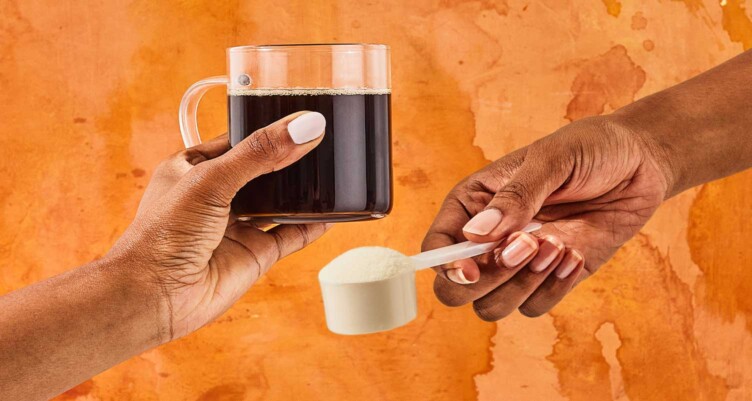
- Hydrolyzed collagen peptides withstand temperatures up to 393°F — far above the 195-205°F range coffee is brewed at, so your peptides stay intact in a hot cup.
- The studied dose for skin, joint and bone support is 2.5 to 15 grams of collagen per day, and most people land at 10-20 grams per cup of coffee.
- Side effects are mild and uncommon (usually a feeling of fullness or light bloating at higher doses), and grass-fed, hydrolyzed peptides are well-tolerated for healthy adults.
- The easiest way to do it: brew your coffee, stir in one scoop of hydrolyzed peptides (or use a collagen coffee pod), give it a quick stir and drink.
We’ve been putting collagen in our coffee at Bulletproof since long before it was a TikTok trend, because the answer to “does it work?” is more straightforward than the debate would suggest. Yes, it works. The peptides survive the heat, the amino acids do what protein amino acids do, and the routine itself is one of the simplest ways to add a clean, grass-fed protein source to your morning.
The question worth asking isn’t really “does collagen in coffee do anything?” — it’s “how do I do it right?” That’s what this guide is for. We’ll walk through the temperature science, the side effects worth knowing, the right dose, whether it breaks a fast, and the 30-second routine we use ourselves.

What Is Collagen?
Collagen is the most abundant protein in your body. It provides structure to skin, joints, bones, tendons and connective tissue, and your body’s natural production starts to slow in your mid-20s. That’s why supplementation became such a popular topic in the first place.[1]
The form that goes into coffee is hydrolyzed collagen peptides: collagen that’s been broken down into short amino acid chains so it dissolves cleanly in hot or cold liquid. Hydrolyzed peptides are also the form studied in most clinical research on skin, joint and bone outcomes.
For the full breakdown of collagen types and how supplementation actually works in the body, see our collagen protein guide.
Does Collagen in Coffee Actually Work?

This is where the internet splits. One side says collagen is a miracle skin fix. The other (including a widely-cited Texas A&M scientist) argues that supplementing collagen is pointless because your body breaks it down into amino acids anyway. Neither extreme is quite right — and collagen’s benefits extend well beyond skin, reaching your joints, bones, hair and nails too.
Here’s the honest answer: yes, collagen does get broken down into amino acids during digestion — that’s how all dietary protein works. But the amino acids in collagen are specific. It’s particularly rich in glycine, proline and hydroxyproline, the three building blocks the body uses to rebuild its own collagen tissue.[2] So when you supplement, you’re giving your body the raw material it preferentially uses for skin, joints and connective tissue.
The clinical evidence backs this up. A systematic review in the Journal of Drugs in Dermatology found that hydrolyzed collagen supplementation improved skin elasticity and hydration across multiple controlled trials.[3] Separate trials have shown benefits for bone density support in postmenopausal women[4] and joint comfort in active adults.[5] The takeaway: it’s not a miracle, but it’s a real, studied protein source that delivers the specific amino acids your body uses to maintain structure.
And as a daily routine, collagen peptides give you 10-20 grams of high-quality protein in a single cup of coffee. That alone makes it a useful upgrade over plain black coffee.
There’s also a secondary benefit worth knowing if you pair collagen with caffeine specifically: the amino acids in collagen may help buffer the cortisol response that pure caffeine produces. Many people who add collagen (or any protein) to their morning coffee report feeling less jittery and more steadily energized than coffee alone.
Does Hot Coffee Destroy Collagen?
This is the second-most-asked question, and it’s a reasonable concern. The short answer: no, brewing-temperature coffee doesn’t destroy hydrolyzed collagen peptides.
The denaturing threshold for hydrolyzed collagen is approximately 393°F (200°C), according to standard food science data. Coffee, by comparison, is brewed at 195-205°F and served at even lower temperatures by the time you drink it. There’s a roughly 200-degree buffer between your cup and the temperature where the peptide bonds would start to break.
There’s also a subtle point worth making: even if some denaturing did happen, the peptides are already hydrolyzed (pre-broken into shorter chains specifically so they can be efficiently absorbed). Your stomach acid and digestive enzymes will do far more “breaking down” than your coffee ever could. The amino acids end up in your bloodstream and tissues regardless.
The form matters more than the heat. Stick to hydrolyzed peptides, which dissolve cleanly without clumping. Whole collagen powders or gelatins don’t blend as smoothly into hot liquid and can leave a gummy texture.
Side Effects to Know
Collagen peptides are generally well-tolerated, but they’re not side-effect-free. No supplement is. Here’s what the research and product safety data actually show.
Mild digestive discomfort is the most commonly reported effect, usually at higher doses (above 20 grams per serving) or in people new to protein supplementation. It typically shows up as bloating, gas or a feeling of heaviness. The fix is usually to drop the dose to 10-15 grams and split it across the day if needed.
Allergic reactions are rare but possible, particularly for people with sensitivities to the source animal. Marine collagen comes from fish; bovine and porcine collagen come from cattle and pigs. Check the label if you have a known allergy.
Pregnancy and nursing. The research base for collagen supplementation in pregnant or nursing women is limited. We recommend talking to a doctor before adding any new supplement during these stages.
For most healthy adults at standard doses of 10-15 grams per day, collagen is among the most well-tolerated supplements available. Choosing grass-fed, pasture-raised collagen that’s third-party tested for purity reduces the (already low) risk further.
How to Add Collagen to Coffee
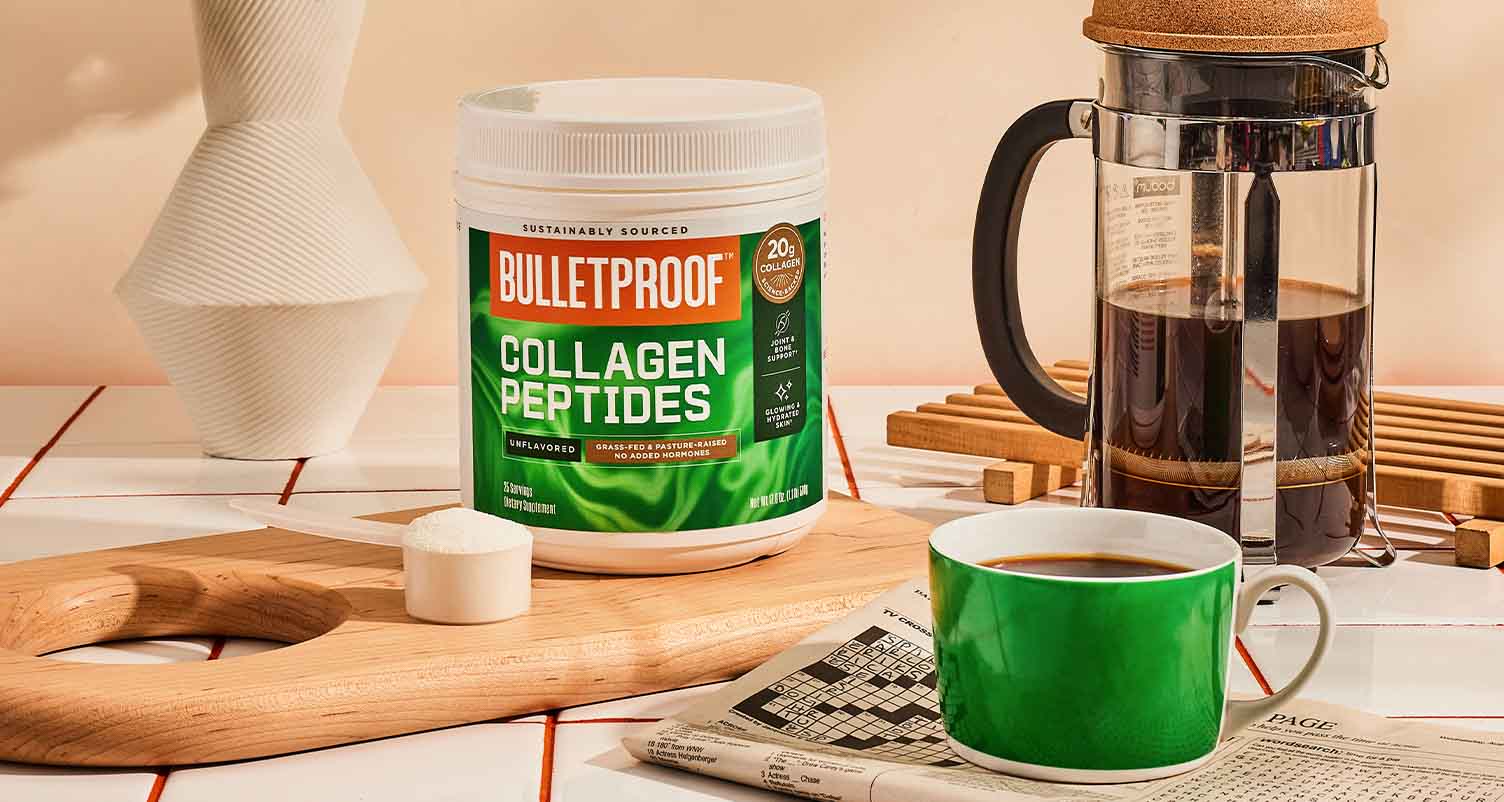
This is the part the skeptic articles never cover. Here’s exactly how to do it.
- Step 1: Brew your coffee normally. Drip, French press, espresso, pour-over: any method works. Brewing temperature doesn’t need to change.
- Step 2: Add 2 scoops of hydrolyzed collagen peptides to your cup. If you’re using one of The Original + Collagen Coffee Pods, the collagen is already inside; just brew the pod.
- Step 3: Stir for 10-15 seconds. Hydrolyzed peptides dissolve cleanly without a frother, though a quick stir with a milk frother or blender gives you a creamier mouthfeel.
Optional upgrade: Add a tablespoon of Brain Octane C8 MCT oil and a tablespoon of grass-fed butter for the full Bulletproof Coffee recipe experience: clean energy, sustained focus and a protein source all in one cup. (For a deeper look at why C8 matters for energy and brain fuel, see our guide on MCT oil benefits.)
The whole routine takes 30 seconds and adds 10-20 grams of grass-fed protein to a beverage you were going to drink anyway. That’s the appeal — it’s not a new habit, it’s an upgrade to one you already have.
Which Collagen Is Best for Coffee?
Not all collagen is built the same way. A few things matter when you’re choosing what goes in your cup.
- Hydrolyzed peptides over whole collagen. Hydrolyzed peptides dissolve cleanly in hot liquid and are the form used in most clinical studies. Whole collagen or gelatin will clump.
- Grass-fed, pasture-raised sourcing. The amino acid profile is similar across sourcing, but feed quality matters for trace minerals, fatty acid profile and the absence of antibiotics and hormones. We use grass-fed, pasture-raised bovine collagen for our own Bulletproof Collagen Peptides.
- Third-party tested for purity. Look for brands that third-party test for heavy metals, contaminants and protein content. This is non-negotiable: collagen comes from animal sources and quality varies widely across the industry.
- Flavored vs unflavored. Both work fine in coffee. Unflavored peptides are essentially tasteless when mixed into a brewed cup. Flavored versions (vanilla, chocolate) add a subtle sweetness that pairs well with darker roasts.
- Pods vs powder. If you brew with a Keurig-style machine, collagen coffee pods are the easiest path: pre-measured, no separate scoop to dirty. If you brew French press or pour-over, scoopable peptides give you more control over dosing.
The Bottom Line
Putting collagen in coffee works. The peptides survive the heat with a 200-degree safety margin. The amino acids deliver the specific building blocks your body uses for skin, joint and bone tissue. Side effects are mild and infrequent at standard doses. And the routine itself is one of the easiest ways to add 10-20 grams of grass-fed protein to a morning beverage you were going to drink anyway.
If you’re ready to try it, Bulletproof Collagen Peptides and our full collagen peptide line are grass-fed, pasture-raised and third-party tested for purity — the same peptides we drink in our own coffee every morning.
Frequently Asked Questions
More From Bulletproof


Does collagen in coffee really work?
Yes. Hydrolyzed collagen peptides survive coffee’s brewing temperature (195-205°F is well below the 393°F denaturing threshold), and once digested they deliver glycine, proline and hydroxyproline: the specific amino acids your body uses to rebuild collagen tissue. Clinical studies show measurable benefits for skin elasticity, joint comfort and bone density at standard supplementation doses.[6][7]
Does hot coffee destroy collagen?
No. Hydrolyzed collagen peptides denature at around 393°F, while coffee is brewed at 195-205°F and served lower. There’s a roughly 200-degree safety margin between your cup and the temperature where the peptide bonds would actually break down.
Are there side effects from putting collagen in coffee?
Adding collagen to your coffee doesn’t introduce new side effects beyond standard collagen supplementation. The combination is well-tolerated for most people. The most commonly reported effects are mild bloating or a feeling of fullness at doses above 20 grams, and rare allergic reactions for those with sensitivities to fish, bovine or porcine sources. If you’re pregnant or nursing, talk to a doctor before starting any new supplement.
Does collagen in coffee break a fast?
Technically yes. Collagen peptides are protein, which means they have calories (around 35-40 per 10 grams) and they trigger an insulin response. For strict water-only fasting, that’s a break. For most people doing intermittent fasting for general metabolic health, the impact is small and many treat collagen coffee as fasting-compatible. Match the answer to your specific goal — and if you’re new to fasting, see our intermittent fasting guide for the full breakdown of what’s compatible with which fasting window.
How much collagen should I add to my coffee?
10-20 grams per cup is standard, which is one scoop of most hydrolyzed peptide products. Daily intake of 2.5 to 15 grams has been studied for skin and joint support, with higher doses (up to 20 grams) explored for bone density. There’s no benefit to going above 20 grams in a single dose for most people.
Can I take creatine and collagen together in my coffee?
Yes. Creatine monohydrate dissolves in hot coffee and works fine alongside collagen peptides. Creatine supports strength and recovery, while collagen supports skin, joint and bone structure, so they don’t overlap or interfere with each other. Pair them if you want both benefits in a single morning cup.
Does collagen in coffee count as protein?
Yes. Collagen is protein, and a standard 10-20g scoop of hydrolyzed peptides delivers roughly 10-20g of protein toward your daily total. The caveat: collagen has a different amino acid profile than complete proteins like whey, eggs or meat. It’s particularly rich in glycine, proline and hydroxyproline (great for connective tissue support) but lower in some essential amino acids like tryptophan. For overall protein quality and muscle maintenance, treat collagen as a supplement to varied protein sources rather than a sole protein source.
Can you taste collagen in coffee?
Unflavored hydrolyzed collagen peptides are essentially tasteless in coffee. Texture is more of a question than flavor: if you add a full scoop to a small cup, you may notice a slightly fuller mouthfeel, and undissolved clumps are possible if you skip the stir step. A small frother or whisk for 10-15 seconds dissolves the peptides cleanly. Flavored versions (vanilla, chocolate) add subtle sweetness if you prefer that.
Does adding collagen to Bulletproof Coffee enhance the benefits?
Adding collagen to Bulletproof Coffee stacks three different mechanisms in one cup: the C8 MCT oil converts to ketones for clean cognitive fuel, the grass-fed butter slows caffeine absorption to extend the energy curve and the collagen peptides add 10-20g of protein that may help buffer the cortisol response while delivering the amino acids (glycine, proline and hydroxyproline) your body uses for skin, joint and bone tissue. The result is the morning routine many people find more sustaining than coffee alone: steady energy, fewer jitters and a clean protein source you’d otherwise need to eat separately.
Sign up for early access to sales, product launches, the latest Bulletproof news and more!